What a Couple Really Pays for Assisted Living
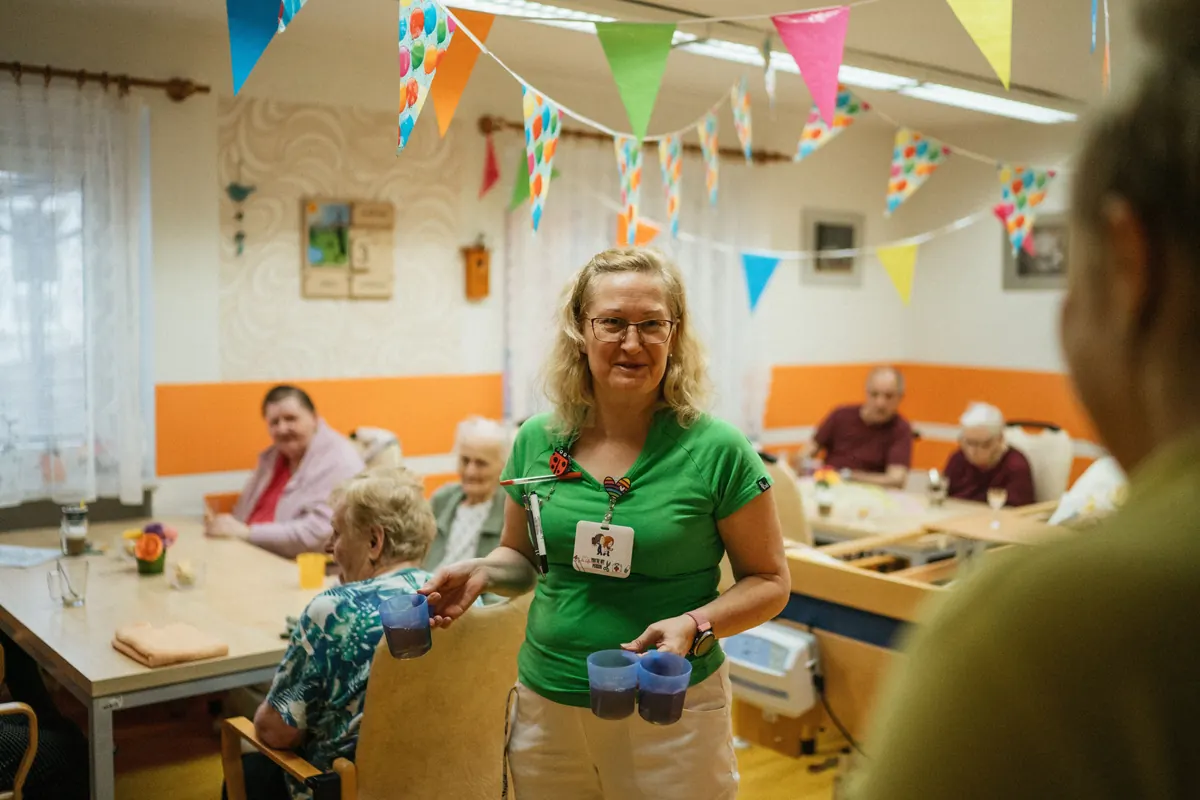
If you and your spouse are pricing a move together, average cost of assisted living for a couple is the figure that decides whether the move is possible this year or must wait. You are not buying two apartments, and you are not buying one person's care twice. You are buying one room and two care plans.
Sources: CareScout Cost of Care Survey 2025, released March 2026; SeniorLiving.org 2026 couples guide; accessed October 2026.
The math up front
On average cost of assisted living for a couple, start from the single-person median, then add the second person. Assisted living runs a national median of $6,200 per month for one person, per the CareScout Cost of Care Survey 2025, released March 2026, or $74,400 per year ($6,200 times 12). When a couple shares one room, most communities charge a second-person fee rather than a second full rate. SeniorLiving.org's 2026 couples guide puts that fee at about $1,000 to several thousand dollars per month, and the $1,000 to $2,000 band used here is the commonly published range within that guide. Add it to the single median and the shared-room total is $7,200 to $8,200 per month, or $86,400 to $98,400 per year.
Two separate rooms are a different calculation: two full single rates come to about $12,400 per month ($6,200 times 2), or $148,800 per year, before extra care-level charges billed per person. Sharing one room therefore saves $4,200 to $5,200 per month against two rooms, or $50,400 to $62,400 per year. That saving is the room, not the care.
| Arrangement | Monthly | Annual (monthly x 12) |
|---|---|---|
| One person alone | $6,200 | $74,400 |
| Second-person fee, published range | $1,000 to $2,000 | $12,000 to $24,000 |
| Couple sharing one room | $7,200 to $8,200 | $86,400 to $98,400 |
| Couple in two separate rooms | About $12,400 | $148,800 |
Every figure in the table is arithmetic from the two sourced inputs, the $6,200 CareScout median and the $1,000 to $2,000 second-person fee range, except the two-room row, which is two single rates added together. Treat these totals as the planning range and get your own community's all-in quote in writing. For the single-person detail, read how much does assisted living cost.
Assisted living cost for a couple: what the second-person fee covers, and what it does not
The second-person fee covers the second resident's share of the shared costs: meals, activities, housekeeping for the shared room, utilities, and care coordination for two people instead of one. That is why it runs into four figures even though no second room is rented: a second person eats three meals a day, joins activities, and generates laundry and housekeeping.
What the fee does not cover is personal care, billed per person. If one spouse needs help bathing and dressing and the other does not, only the spouse who needs the help is billed for that care level. Medication management is billed per person as well, and a memory care premium is billed for the spouse who needs it only. The room is shared, the care is not. Ask for a written breakdown that splits the room charge, the second-person fee, and each spouse's care level.
Assisted living for couples cost: shared room vs two rooms
A shared room suits couples who sleep on a similar schedule, share a bathroom comfortably, and want to stay together through the day. The saving is real, $4,200 to $5,200 per month against two rooms, but the trade is privacy and space: one bathroom, one closet system, and one television schedule. Couples who keep very different hours often find the saving is not worth the friction.
Two rooms suit couples who need different sleep schedules, different care levels that require different equipment, or simply more space during the day while eating together. The cost is two full single rates, about $12,400 per month at the national median, before per-person care charges. Ask whether a two-bedroom unit is priced as one unit plus a second-person fee or as two units, because the two pricings land thousands apart, and get the answer in writing.
Couples discounts: ask, and get them in writing
Some communities discount the second person, waive the second-person fee for a period, or reduce the second spouse's care-level charge. No published survey gives a standard discount rate for couples, so this page claims none. The discount, when it exists, is a community offer, not a market rate, and it can be introductory, ending after a set number of months.
Use discounts by comparing all-in totals, not headline offers. Get three written quotes that each state the room charge, the second-person fee, each spouse's care level, and any discount with its end date. A community that waives a $1,500 fee for six months and then restores it is not cheaper over two years than one that charges $1,000 from day one. Compare the 24-month total, and get the discount terms in writing before you sign.
When couples split levels of care
Split care is common: one spouse stays in assisted living while the other moves to memory care, or one spouse needs a much higher care level than the other. Worked from the sourced medians, one spouse in assisted living at $6,200 plus one spouse in memory care at $6,690 to $8,019 comes to $12,890 to $14,219 per month, or $154,680 to $170,628 per year. The two spouses are billed as two residents in two units, with the memory care premium on one person only.
Split care changes the daily question as well as the bill. The spouse in assisted living can visit freely, but can join activities with the memory care spouse only where the unit allows visitors. Ask the community's written policy on visits and shared meals. For the memory care figures, read how much is memory care per month.
Cost of assisted living for a married couple: Medicaid and VA notes
For married couples, Medicaid and VA rules add protections for the spouse who stays at home or in a lower level of care, but the protections vary by state and this page states no protected amount, because no single national figure is safe to quote. Medicaid spend-down for a couple is not the same as for a single person, and the look-back, the five-year review of gifts and transfers, still applies to transfers made before applying. A Medicaid waiver, the state program that pays for care, may cover assisted living in some states and not in others, so check your state agency before you budget around it.
VA Aid and Attendance can add monthly dollars for a veteran spouse, and a long-term care insurance policy pays its benefit after the elimination period, the waiting period before the policy pays, runs out, where a policy exists. Both routes take months to set up, so start them before the move. Read does Medicaid pay for assisted living, Medicaid spend-down rules, VA Aid and Attendance requirements, veterans affairs assisted living, and how to pay for assisted living with no money. For the parent hub, read assisted living costs.
Frequently asked questions
Do couples get a discount for sharing a room?
Usually the discount is the room you do not rent, not a percentage off the care. Some communities go further and waive or reduce the second-person fee, but that offer is often introductory, with a fixed end date after which the full fee returns. Ask whether any discount is permanent or introductory, get its end date in writing, and compare the 24-month total.
What happens to the fee if one spouse moves to a higher level of care?
Only that spouse's care line rises, and the other spouse's care line stays where it is. The total rises by the moving spouse's tier increase alone. If the move is to memory care, the room changes too, and the couple starts paying two unit rates. Ask for the full tier schedule for both spouses in writing at move-in.
Can a couple share one room if one needs memory care?
Most communities do not allow it. A memory care unit is a secured unit with its own staffing, safety rules, and license, and the spouse who does not need memory care is generally not admitted as a resident of that unit. The usual arrangement is two units on one campus, with visits between them. Ask the community for its written policy on mixed couples before you assume the couple can stay in one room.
What if one spouse dies: does the fee drop?
The second-person fee ends, and the surviving spouse drops to a single-resident rate, but the change is not always instant or automatic. Ask for the written survivor clause before move-in: how much notice the community needs, whether the surviving spouse must change rooms, and whether prepaid fees are refunded. Get that clause in writing while both spouses can read it.
Your next step on average cost of assisted living for a couple is to get two written quotes that split the bill the way this page does: room charge, second-person fee, and each spouse's care level, with any discount and its end date stated. Compare the 24-month totals, and do not sign until the survivor clause and the tier schedule are in writing.