Board and Care or Assisted Living? An Honest Comparison
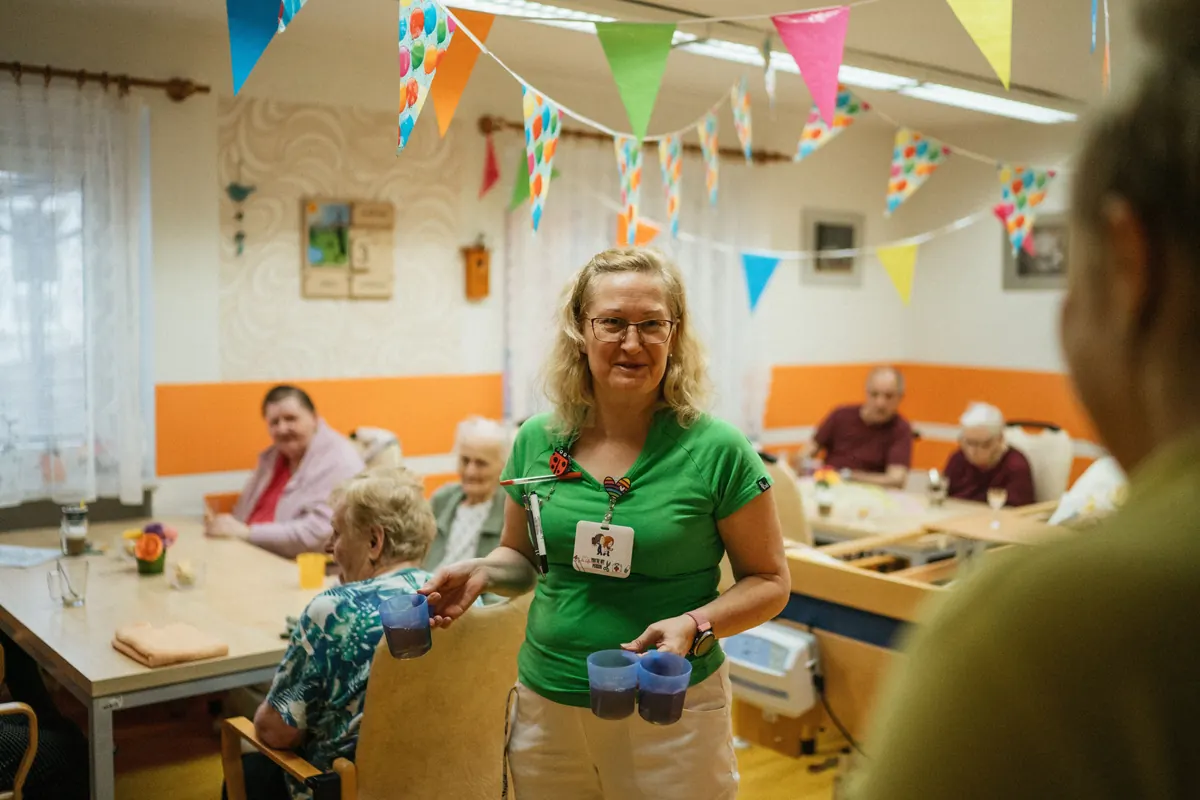
If you are choosing between a quiet house and a busy community for your parent, board and care vs assisted living is the comparison that decides the daily feel of the place, not just the monthly bill. You may be touring homes after a hospital stay or a fall changed what your parent can manage alone. This page compares the two settings side by side, so you can match the setting to your parent's care needs and budget.
Sources: A Place for Mom Cost of Long-term Care and Senior Living report 2026; California Department of Social Services, Community Care Licensing Division, RCFE overview; Washington State Department of Social and Health Services long-term care residential options; Pennsylvania Code Title 55, Chapter 2600; accessed October 2026.
What a board and care home is
A board and care home is a small residential house, usually with 4 to 10 residents, where staff provide meals, supervision, and help with daily tasks such as bathing, dressing, and taking medicine. The house often looks like any other house on the street, with a shared living room, a shared dining table, and bedrooms that may be private or shared.
An assisted living community is larger, often serving dozens of residents in apartments or rooms around shared dining rooms, activity rooms, and outdoor areas. A small house can still be the wrong house, so judge each home on staffing and care, not on size alone.
Side by side: board and care and assisted living
| Feature | Board and care home | Assisted living community |
|---|---|---|
| Size | Usually 4 to 10 residents in a house | Dozens of residents in a community building |
| Staff ratio | Often closer, with fewer residents per caregiver | Varies by shift and care level; ask for your parent's floor |
| Amenities | Shared living room, garden, home-style meals | Dining room, activity rooms, outings, often a salon |
| Meals | Home-style meals from the house kitchen | Dining room meals at set times |
| Activities | Small-group activities in the house | Set calendar of classes and outings |
| Medical care | Supervision and personal care; nursing visits as arranged | Personal care plus health services, by community |
| Typical cost | National median $4,500 per month, per A Place for Mom 2026 | National median $5,419 per month, per A Place for Mom 2026 |
The table gives the shape of each setting, not a promise about one house. Tour both types before you rule either one out.
What each option costs
A Place for Mom's 2026 report puts the national median monthly cost of a care home at $4,500 and the national median monthly cost of assisted living at $5,419. The gap between those two medians is $919 per month. Over a year, $4,500 per month comes to $54,000, and $5,419 per month comes to $65,028, a gap of $11,028 per year.
Location, room type, and care level move the price most. A private room costs more than a shared room, a metro house costs more than a rural house, and a resident who needs help with most daily tasks costs more than a resident who needs only meals and reminders. Ask each home for a written breakdown that lists the base fee, the care-level fee, and every add-on, such as medication help or transport. In a board and care vs assisted living price check, get the fee-increase history in writing too, since a low starting fee that rises fast can pass a higher starting fee within a year. For the wider price picture, read how much does assisted living cost and assisted living costs.
The naming maze: the same house, different state names
States license small residential homes under different names, so search by the license name in your parent's state, not by the phrase on a brochure. In California, the license name is Residential Care Facility for the Elderly, shortened to RCFE. California's Department of Social Services describes an RCFE as a setting that provides 24-hour non-medical care for adults who need support with everyday activities, and the California Department of Social Services licenses RCFEs. In California, a small RCFE with 4 to 6 beds is often called board and care, while a larger RCFE is often called assisted living, under the same license type.
In Washington, the small-home license name is adult family home. Washington's Department of Social and Health Services describes adult family homes as neighborhood homes licensed for 2 to 6 residents, providing a room, meals, laundry, supervision, and varying levels of personal care. In Pennsylvania, Texas, and Georgia, the small-home name to look for is personal care home. In Pennsylvania, personal care homes are licensed through the Department of Human Services under Title 55, Chapter 2600, and house 4 or more adults who are not relatives of the operator.
Licensed or not is the question that matters most in this section. A licensed home faces state inspections and staffing rules, while an unlicensed home may face neither, so ask for the license number and check it with the state agency before you sign.
Which setting fits your parent
A board and care home often fits a parent who wants a quiet house, knows the staff by name, and needs steady supervision without a busy social calendar. It can also fit a parent with dementia who wanders, if the house has secured exits, staff trained for wandering, and a written plan for a resident who tries to leave.
An assisted living community often fits a parent who wants company, group activities, and a choice of dining and outings each day. It can also fit a parent whose care needs may rise, since a larger community may offer more care levels under one roof. In a board and care vs assisted living choice, a parent with complex medical needs that require regular skilled nursing may fit neither setting well, and a nursing home assessment may be the honest next step. For that comparison, read assisted living alternatives and nursing home costs.
Questions to ask on every tour
Ask how many caregivers are awake and on duty at night, and how many residents each caregiver covers on the night shift. Ask what training caregivers complete before they work alone, and ask who covers a shift when a caregiver calls in sick. Get the backup plan in writing.
Ask about discharge policies in plain terms: what behaviors or care needs would force a move, how much notice the home gives, and what help it offers to find the next setting.
Frequently asked questions
Does Medicaid cover board and care?
Medicaid coverage for a small residential home depends on your parent's state and on the home's contract status, so no national yes or no applies. Some states pay for care in small homes through a waiver, the state program that pays for care at home and in the community instead of a nursing home, while other states pay only for nursing home care. Start with your state Medicaid agency, ask whether small residential homes are a covered setting under that state's waiver, and ask whether the specific home holds a Medicaid contract. Also ask the home in writing whether a private-pay resident who later qualifies for Medicaid can stay, and note the look-back, the five-year review of gifts and transfers, that applies to Medicaid applications.
Are board and care homes regulated?
Licensed small homes are regulated by the state agency that issues their license, which sets care, safety, and staffing rules and inspects the home. The agency name and the inspection cycle differ by state, so find your state's licensing agency through the state government site and search the home by name and license number. Ask the home for its most recent inspection report and any citations, and ask the agency how to file a complaint if care slips.
What staff training is required?
No single national training standard covers small residential homes, so the required training is set by the state license and by the home itself. Ask for the training each caregiver completes before working alone, the dementia training for staff who care for residents with dementia, and how often refresher training happens. Ask whether caregivers hold current first aid and CPR certification and whether medication help is given only by staff trained for that task.
Can couples stay together in board and care?
Couples can stay together in some small homes and cannot in others, and the answer turns on room size, shared-room rules, and each partner's care level. Ask whether the home has a room large enough for two people, whether both partners must meet the same care criteria, and what second-person fee applies. Ask what happens if one partner's care needs rise past what the house can handle, and get the couple policy in writing.
Tour one small home and one larger community in the same week. Ask each home for its night staffing, caregiver training, backup coverage, discharge policy, and fee-increase history in writing, and read assisted living alternatives before you sign anything.