Nursing Home Costs in 2026: The $115,000-a-Year Reality
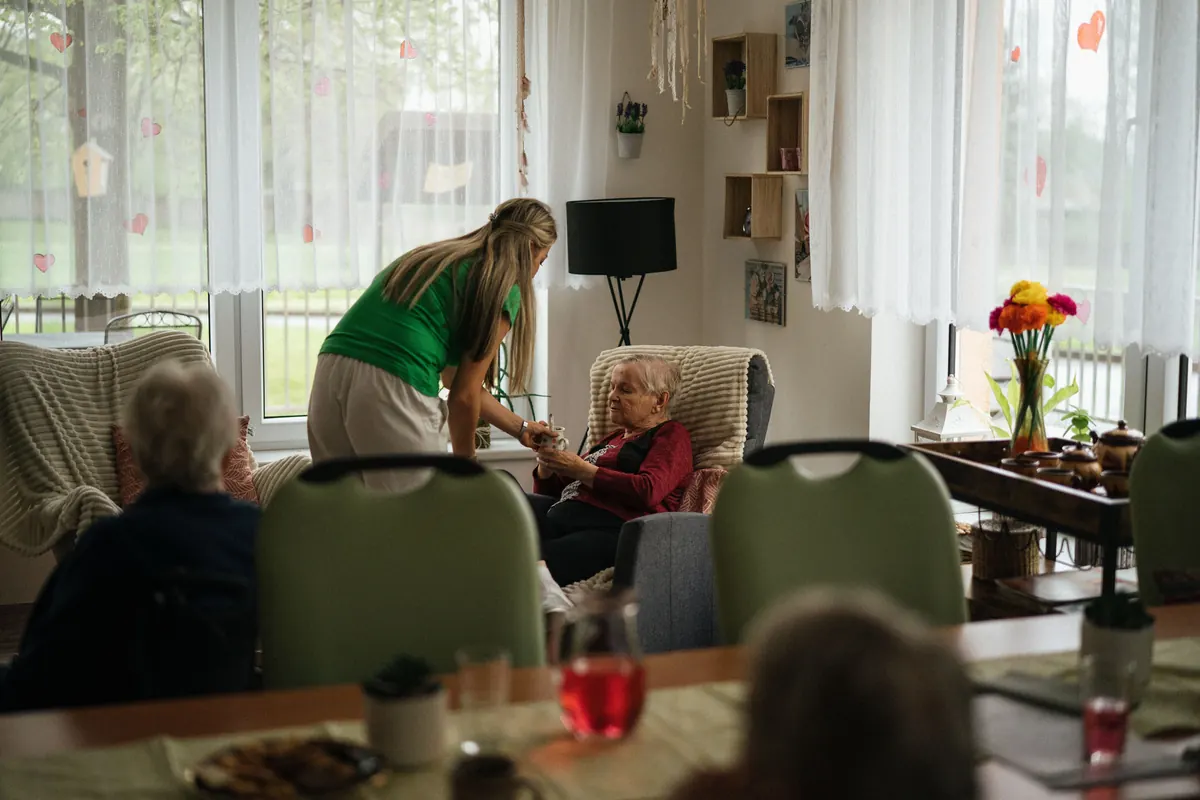
How much does a nursing home cost? The national median is $9,581 a month for a semi-private room in 2026, more than double the assisted living median of $6,200, per the CareScout Cost of Care Survey 2025 (released March 2026). A nursing home is the single most expensive kind of care a family can buy, and the reason is not profit padding alone: nurses are on the floor around the clock, and the law sets staffing and inspection standards that assisted living never faces. You are paying for a hospital-grade building with bedrooms in it.
If you are reading this from a hospital room after a discharge planner said your parent needs a facility by Friday, skip to the payment section first. The price table below can wait; the question of who pays cannot, and families who sort the money before they tour pick better buildings.
The 2026 numbers at a glance
Every figure below is the national median from the CareScout Cost of Care Survey 2025, released March 2026. These are the numbers the industry itself reports, and they are medians, not quotes: half of residents pay more, half pay less.
| Room type | Per day | Per month | Per year |
|---|---|---|---|
| Semi-private (shared room) | $315 | $9,581 | $114,975 |
| Private room | $355 | $10,798 | $129,575 |
Sources: CareScout Cost of Care Survey 2025 (released March 2026). Daily, monthly, and yearly figures are each the survey's reported medians, not conversions of each other.
Expect these numbers to keep climbing. Nursing home costs have risen roughly 5% a year in recent Cost of Care surveys, which means today's $9,581 monthly median would sit near $10,060 a year from now at that rate. That is a math illustration, not a surveyed figure, but it shows the direction. The annual increase is written into most residency agreements, so ask what it is before you sign.
Nursing home cost per month
A nursing home monthly bill is mostly one number, the daily rate times the days in the month, plus a short list of extras. What the daily rate covers is broad: the room, all meals, 24-hour nursing care from licensed nurses and aides, help with every daily activity, medication administration, basic therapies ordered by the doctor, and activities. This is genuinely all-inclusive care, which is exactly why it costs what it costs.
What the daily rate does not cover is smaller but real: personal items like toiletries and clothing, salon and barber services, a private phone line or television in some buildings, some therapies beyond what the care plan authorizes, and the private-room differential if your parent moves from a shared room to a private one. None of these are surprises if you see them first. Ask the admissions office for the written fee schedule for extras, and ask them to put the daily rate and the room type in the same document. A building that quotes the daily rate verbally and hands you a fee schedule for nothing else is testing how closely you read.
Average cost of nursing home
You will sometimes see an "average" nursing home cost quoted that is higher than the median. Treat the median as the honest number: a handful of ultra-expensive coastal facilities can drag an average thousands of dollars above what most families actually pay, while the median, half above and half below, describes the typical family. When a source quotes a figure without saying median or average, keep looking. On this site, every nursing home figure is a median unless it is explicitly labeled a range or an estimate.
Semi-private vs private room: is it worth $1,200 more a month?
The difference between a shared room and a private room works out to $1,217 a month ($10,798 minus $9,581, both CareScout 2025 medians). Over a two-year stay, that is roughly $29,000 for a door that closes.
What the money buys is privacy, quieter nights, and space for your parent's own furniture, not better medical care: the nurses, the therapies, and the food are the same on both sides of the hallway. Two facts decide this more than taste. First, Medicaid in most states covers only the semi-private rate, so a private room usually means paying the $1,217 difference out of pocket. Second, semi-private rooms are the default inventory, so they are most often available without a wait. Families paying privately should tour both, then ask whether $1,217 a month buys anything their parent will notice at 2 a.m. If not, the shared room is the honest pick.
Why nursing homes cost so much more than assisted living
The gap is real: $9,581 a month for a semi-private nursing home bed versus $6,200 a month for assisted living, both national medians from the CareScout 2025 survey. Three things explain nearly all of it. First, staffing. A nursing home must have licensed nurses providing 24-hour skilled nursing care, plus aides at ratios the state inspects. Assisted living is staffed mostly by aides, with a nurse on call or on limited hours. Second, regulation. Nursing homes face federal inspections, published ratings, and staffing mandates that assisted living does not, and compliance costs land in the daily rate. Third, the residents are sicker: complex medication regimens, wound care, feeding tubes, and post-surgical recovery are routine in a nursing home and rare in assisted living.
So the comparison in assisted living vs nursing home costs is a care-needs decision, not a shopping choice. If your parent needs 24-hour skilled nursing, assisted living is not the cheaper option; it is the wrong option. Families far more often under-buy care trying to save money and end up moving twice. The assessment, not the price, should drive this call.
What drives your price up or down
The national median is a starting point, not a quote. Four things move your actual number. State matters most (see below). Urban versus rural matters inside every state: large metros price well above the state median, smaller cities and rural counties below it. For-profit versus nonprofit moves quality more reliably than price. Medicaid-heavy versus private-pay buildings differ too: Medicaid-heavy facilities often post lower private rates, while private-pay boutique buildings charge more for newer construction. Get three quotes in writing.
State-by-state snapshot
Nursing home prices are set locally, and the national median hides enormous geography. In the CareScout 2025 survey, labeled 2026 state medians stretch from roughly $7,000 a month at the low end to more than $14,000 a month at the top. That is the single biggest lever a family has: the same level of care can cost twice as much two states over.
Within any state, the metro premium applies again: the state median is not the price in its biggest city. Families who search how much does a nursing home cost usually stop at the national median; the state median plus three local quotes is the planning basis that actually holds. Our state guides, rolling out across this site, will price all 50 states from this same survey and name each state's Medicaid program, because the cheapest building is only cheap if it accepts the program that may one day pay the bill.
How families pay for it
Almost nobody pays $114,975 a year out of pocket for long. Most families asking how much does a nursing home cost are really asking how much of it they will pay themselves, and the answer runs through four routes, usually ending at the first one.
Medicaid is the main payer. It covers nursing home room and board nationwide for residents who qualify financially, and it pays for over half of all nursing home residents. The rough federal contours: income around $2,982 a month for a single applicant, countable assets around $2,000, and a five-year look-back, the five-year review of gifts and transfers, that can disqualify recent gifts. States set their own exact rules, and spouses are protected: the healthy spouse can keep about $162,660 in assets (the community spouse resource allowance) plus a monthly income allowance of up to $4,066.50 in 2026. The warning that matters: giving money away to "get under the limit" inside the look-back window triggers a penalty period with no coverage, and the fix is an elder law attorney before any transfer, not after. See Medicaid spend-down rules and how to pay for a nursing home with no money.
Medicare pays for up to 100 days of skilled nursing after a hospital stay, and almost nothing else. The rules for 2026: the stay must follow a 3-night inpatient hospital stay, days 1 through 20 are fully covered, and days 21 through 100 carry a $217-a-day coinsurance, the share of the bill you pay. That is up to $17,360 out of pocket (80 days times $217) for the maximum stay, plus the $1,736 Part A deductible per benefit period. Medicare does not pay for long-term custodial care or nursing home room and board beyond this. Families who assume Medicare covers the nursing home are the ones who get the $9,581 bill in month four. Full detail at what Medicare pays for and the cost comparison at assisted living vs nursing home costs.
Long-term care insurance pays if your parent bought a policy years ago and now qualifies, usually by needing help with daily activities or having a cognitive impairment. Policies bought after the need appears do not exist; this is a plan-ahead route. Details at long-term care insurance costs.
Private pay and spend-down is the default for families with savings but no policy: pay the monthly rate from assets until the money runs low enough to qualify for Medicaid. This is the most common path into Medicaid coverage, and it is exactly why the look-back rules and the spend-down order matter. Start that planning at admission, not when the account is nearly empty.
Sources: CareScout Cost of Care Survey 2025 (released March 2026); Medicare 2026 skilled nursing facility benefit rules; federal Medicaid eligibility contours, 2026 figures (states set exact rules).
Frequently asked questions
Can a nursing home charge extra fees on top of the daily rate?
Yes, for a defined list of extras: personal supplies, salon services, private-room differentials, and therapies outside the care plan are the usual ones. What it may not do is bill a Medicaid-covered resident for services Medicaid already pays for. The practical protection is the same in every case: ask for the complete written fee schedule before admission and compare it line by line with the daily rate quote. Surprise charges almost always trace back to a fee nobody asked to see.
How fast do nursing home prices rise each year?
Roughly 5% a year in recent Cost of Care surveys. At that rate, today's $9,581 monthly median sits near $10,060 a year from now, a math illustration rather than a surveyed figure. The increase clause is written into the residency agreement, so ask for the percentage and the notice period in writing before your parent moves in; it is one of the few numbers that is negotiable when a building has empty beds.
Do nonprofit nursing homes cost less than for-profit ones?
Not automatically. Nonprofits reinvest their surplus instead of paying owners, which researchers generally associate with slightly better staffing, but the price you are quoted is set by the local market, the room type, and the care level, not the tax status. Get quotes for the same room type from both kinds of building and compare the daily rate plus the extras list. Tax status is a quality signal worth weighing; it is not a discount you can count on.
What is the cheapest way to get 24-hour care at home instead?
There is no cheap version. Round-the-clock home care means paying for 24 billed hours a day, every day, which almost always lands above the nursing home median once you do the math, and that is before you cover the aide's sick days and the management of the whole operation yourself. Home care wins on comfort and familiarity, not on price. If the goal is saving money rather than staying home, the honest options are the ones on the payment list above, starting with home care costs and home health aide rates to run your own comparison.
Of every care option on this site, the nursing home charges the most and Medicare covers the least, so plan the money before you pick the building. The next step that matters is your state's piece of this: the nursing home costs hub will hold each state's median as the guides roll out, and how to pay for a nursing home with no money walks through the Medicaid path step by step.